https://youtu.be/DX6mmkoByyc?si=1_2G9TOpUepWhjsCManga link:
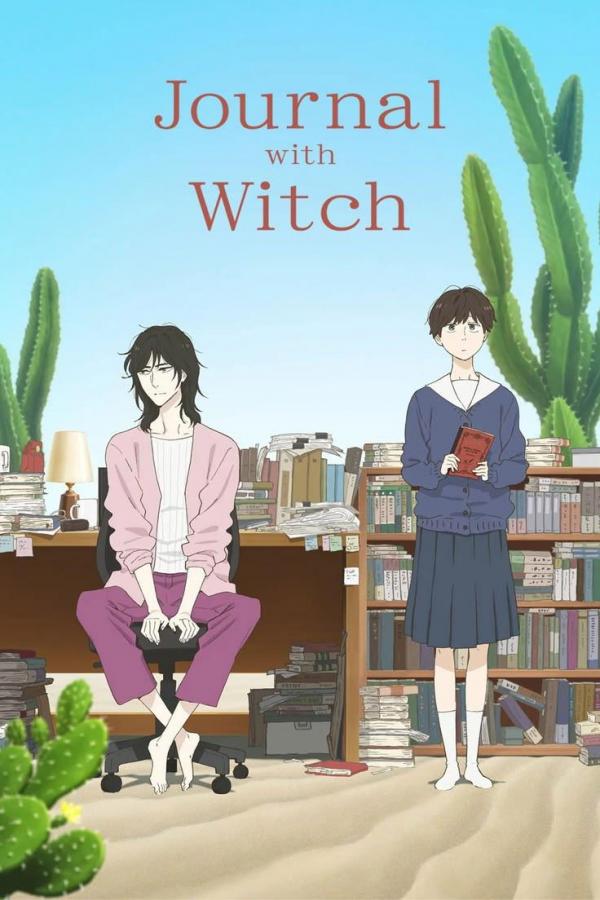
https://www.mangago.me/read-manga/ikoku_nikki/Ikoku Nikki (also known as Journal with Witch) is easily one of my favorite anime of 2026, a criminally overlooked masterpiece, and probably one of the best josei animes to ever be released. On the surface, the premise doesn't hint at the immense emotional impact waiting for you. It is quiet, not flashy, and refuses to emotionally body slam you every episode. Instead, it is an intimate character drama focused entirely on the raw spectrum of human emotions, allowing you to slowly and deeply grow attached to the narrative without even noticing. At its core, this 13 episode journey tests the boundaries of interpersonal connections, exploring the difficult reality that trying to understand another human being completely can sometimes feel overwhelmingly intense.
The anime follows 15 year old Asa Takumi after a sudden car accident leaves her completely orphaned. Finding herself with no support system, she is taken in by her maternal aunt, Makio Kodai, a reclusive, prickly 35 year old novelist who held a massive grudge against Asa's late mother and still wrestles with that unresolved bitterness. Rather than leaning on predictable tropes, the story centers on two fundamentally disconnected, flawed individuals attempting to navigate adulthood, teenage life, and a new lifestyle while sharing the same space. It utilizes an understated, visual approach to storytelling, relying on subtle subtext instead of overly explaining its plot.
While many dramas rely on loud confrontations, explosive meltdowns, and perfectly neat resolutions where everyone can cry, clap and move on, this series relies on reality of awkward pauses, emotional distance, and feelings that are simply too complicated to put into words. This makes the experience feel incredibly grounded and hyper real. It respects the messy nature of human psychology. People don't magically fix their issues after a single meaningful chat. They shut down, misinterpret intentions and hurt the ones they love simply because they express affection badly. The anime forces you to ponder the uncomfortable, simple question of what happens when someone disappears and the world just continuously moves forward. It shows how grief quietly contaminates the most mundane daily routines, like chores frozen mid task, while capturing how a teenager's sudden loss of parental direction feels like music abruptly cutting out.
The script rejects rigid, textbook models of bereavement, treating trauma instead as a chaotic and entirely non linear path. When Asa experiences confusion over why she isn't performing the expected, performative sadness at her parents' funeral, Makio validates her feelings, protecting her from societal judgment. Their very first interaction sets the tone perfectly when Makio tells her things like: "My place is never clean... I deeply despised your mother... I can’t even guarantee that I love you. But I’ll promise you this. I will never trample on your feelings." Because Makio wants Asa to forge her own identity, she deliberately refuses to act as a typical, authoritative parental guide, encouraging her to keep a journal instead to process her thoughts.
The production beautifully uses the medium to visualize internal isolation and abstract psychological hurdles, proving how essential it can be to experience a story in an animated format. The anime masterfully uses visual analogies, like a vast, solitary desert landscape, to effortlessly turn internal hangups and loneliness into seamless metaphors. Every supporting character, from Makio's friends and her love interest, Kasamichi kun, to Asa's best friend, Emiry, feels realistic, as if you are secretly peeking into their private lives. Each character battles their own distinct personal struggles, reinforcing the idea that dealing with individual hardships is exactly what shapes unique human personalities.
The series handles sensitive subjects like grief, differing lifestyles, and loneliness in a beautifully nuanced way, avoiding loud, manipulative melodrama. It values small things, just people existing around each other, trying to understand, failing, and trying again. It trusts quiet moments way more than most anime do, building up an accumulated weight so that when everything spills out, the emotional impact hits like a massive truck.
This anime hits especially hard if you are navigating your teenage years, or if it simply catches you at the right moment in life. For anyone experiencing the isolating weight of tragedy, navigating heavy grief, or feeling completely lost, like you're in a foreign country this series makes you feel seen and understood. It behaves like a comforting embrace you never realized you needed, leaving you with an uncomfortable but vital truth: not every question in life has a clear answer. If you are tired of watching the same repetitive formulas and want a mature, conversation heavy story about learning how to exist imperfectly with someone else, give this a try.
To conclude, here's a little metaphor: The world may seem empty like a desert, but finding your own oasis, watering your own plants to help them survive may help. Ikoku Nikki is easily one of the most powerful human stories told in this medium in a long time. Some people might find it boring, but I highly recommend it to everyone, even as someone who typically loves watching action filled anime!
By the way, I haven't read the manga yet, so I guess that's what I'll do next. Thanks to everyone who even took the time to read all of this



Messages
I loved this anime so much
Me too
And you described it very nicely
ummm girl u gotta become a writer
This anime really moved me ngl
I've been trying to find this series for a while now since I saw someone praising it, but I could never find it, thank you so ,uxh, I can finnaly check it out <33
Yes, check it out It really is a beautiful anime