Good afternoon, I came today in hopes of leaving an honest review on an animated movie I find criminally under-appreciated. I've decided to start this series because I find animated movie to be looked over and considered as "child-ish", when many of them are capable of carrying much deeper stories than one could imagine. Our series opener is a movie made by Guillermo del toro, a Mexican filmmaker known for his interpretations of many famous monsters, as well as his fascination with horror, gothicism, and fairy tales. ⊹ ˖
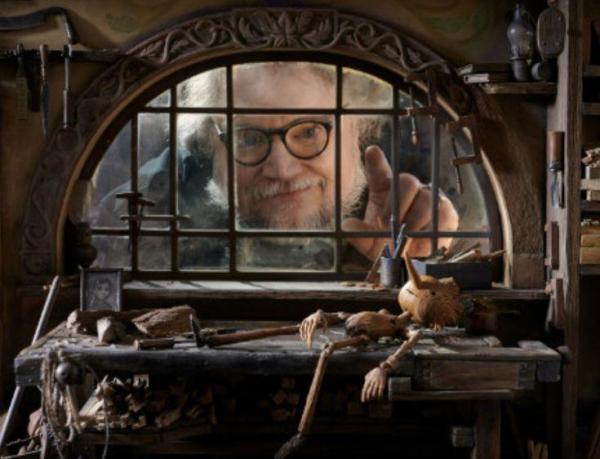
Guillermo del Toro’s Pinocchio is one of those films that trick you with its premise, an interpretation of a famous children fairy tale about a puppet turning into a human boy. That is until you realize that what's special about this specific version is how it deals with grief, death, fascism, war, and what it actually means to be human. Rather than simply retelling the classic story, del Toro completely reimagined Pinocchio’s journey as a dark, deeply emotional fairy tale set in 1930s Fascist Italy.
!!!! SPOILER WARNING: This review contains major spoilers for Guillermo del Toro’s Pinocchio, if you wish for a general review, move until the last paragraph after the attached photos !!!!
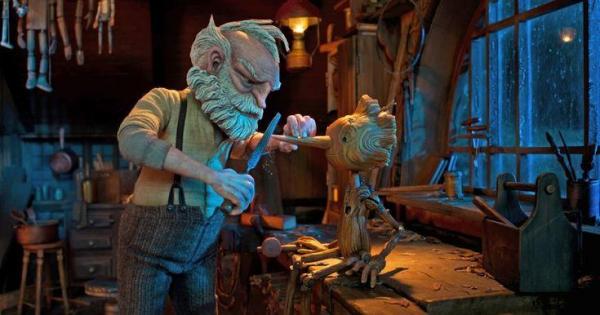
What sets this film on a league of its own is its powerful portrayal of Geppetto and Pinocchio’s relationship. The classic fairy tale talks briefly about how the old man makes pinocchio after the loss of his son, making pinocchio a gift, in this particular reimagining, Geppetto creates Pinocchio out of grief after losing his biological son during world war one, Pinocchio is initially less of a “miracle child” and more a replacement for someone who can never come back. A vessel for Geppetto to take out all his regrets on. Pinocchio desperately wants to be loved for who he is and the indiviual he seeks to be, but Geppetto is stuck in the past, looking for Carlos in a person that is not, in a person who does not understand death and how it changes a man from a loving father, to a drunken mess with passion leaving his eyes every second of the day.
The film doesn't portray grief as something you simply “get over.” Geppetto has to learn that loving Carlo doesn't mean refusing to let him be gone. Pinocchio, meanwhile, has to learn that loving someone also means accepting that you might eventually lose them.
Much to my surprise, the movie had a very realistic and nuanced take on death. Instead of treating death as something that should defeated and overcome like the fairy tale, this film presents death as an unavoidable part of life. Pinocchio’s immortality in reality is a curse. He can, will, and has to continue living when everyone around him eventually has to die. His relationship with Death and how he comes to understand it brings an interesting philosophical question: is mortality part of what gives life meaning? Is one capable of appreciating the smaller, simpler moments in his life more knowing that it will come to an end?
And throughout the movie, as slowly get to have our long awaited answer, death doesn't make life meaningless. Death is what makes our choices meaningful in the first place, because immortality was never a blessing to begin with, Death knew that, and it is why she offered pinocchio the ability to become mortal, which he gains in the end, bringing the movie a new meaning about humanity and what makes something, or someone, worth loving.
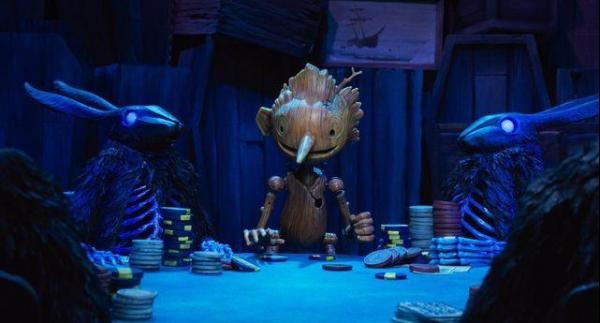
The stop motion animation is absolutely gorgeous, a breathe taking showcase of human abilities. Every character is handmade, from the tiny imperfections in their movements to the incredible detail in their characters and the environments surrounding them. The film manages to make its world simultaneously whimsical, grotesque, beautiful, and unsettling ! Painting del Toro’s fascination with monsters and outsiders perfectly. Pinocchio himself is visually strange rather than conventionally cute, he was a product of an old man's wish during a late night drinking moment. He is not perfect, he is not made to be fawned over, he is the epitome of an imperfect creation.
I also love how the film uses fascism as more than just historical background. Pinocchio is a child who seeks individuality in a system created to obey, conform, and become useful to the state. His inability, and refusal at times, to behave like everyone else makes him a threat to a system that values obedience. Pinocchio’s innocence and childish curiousty becomes a challenge to the authoritarian obsession with discipline the elders try to force upon him.
I think the story's criticism of fascism shines clearest through the character we know as Candlewick, Candlewick has been raised to believe that being obedient and useful is what makes him valuable. His father, a devout follower of Mussolini's ultra nationalist ideology, constantly pressures him to become a “real man” and a good soldier, and so Candlewick initially treats Pinocchio's disobedience as something shameful and disgraceful. But as they spend more time together at the military camp, Candlewick begins questioning the things he has been taught, the fascist ideologies supported by the religious figures in his town. The children aren't being taught to think; they're being trained to follow orders and sacrifice themselves for the state, asked to bring honor to their families by being willing to die for a "better country". Pinocchio's immortality brings a disturbing layer to all of this, because the Fascists begin to see him as a useful tool, someone who can repeatedly throw himself into danger without permanently dying. His body essentially becomes a resource for the regime, an immortal soldier at their will, and a puppet controlled by their filthy hands, tainted with a metallic silver due to their greed.
The ending by itself is a beautiful portrayal of the bittersweet nature of existence. Pinocchio doesn't become human because he looks like a human, he becomes human through the choices he makes, the people he loves, and the pain he is willing to experience for those he cherished. His innocence and chaotic nature is what made him human in the first place, while those who choose to obey the fascist system are nothing more than expandable logs ready to lose their dignity and happiness for power.
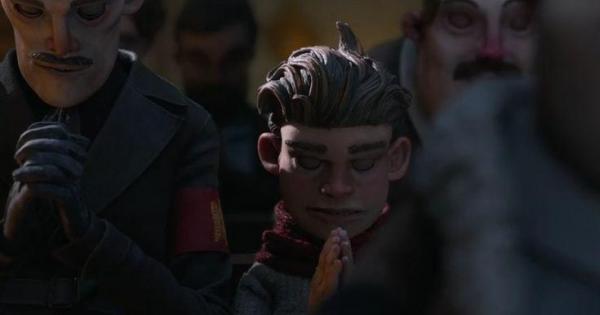
Overall, Guillermo del Toro’s Pinocchio is a beautifully crafted film about grief, individuality, mortality, and unconditional love. It respects the original story while completely reinventing its meaning. It can be funny and whimsical at a time, horrifying the next, and then suddenly a devastating commentary on a system built over children's bodies. More than anything, it understands that being human isn't about how long you live or what you're made of, it's about what you choose to do with the life you've been given, and what your choices bring to the lives of others, whether it may be a blessing or misfortune, it is all marks that you leave in everybody's path, ones that solidify your existence and forces you to stand apart from anyone else. It is a story of accepting what you become.
• Animation: 9.8/10
• Story: 9/10
• characters: 8/10
• emotional impact: 10/10
• voice acting: 9.4/10
• political commentary: 10/10
~ Overall rating: ★★★★☆



Messages
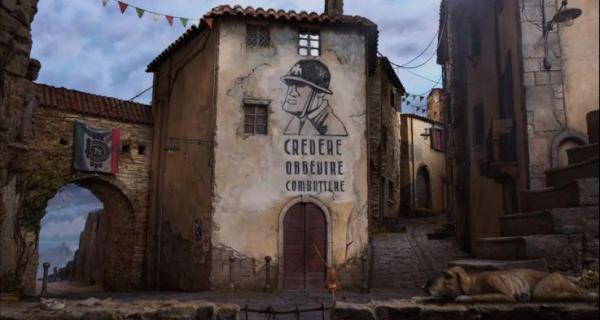
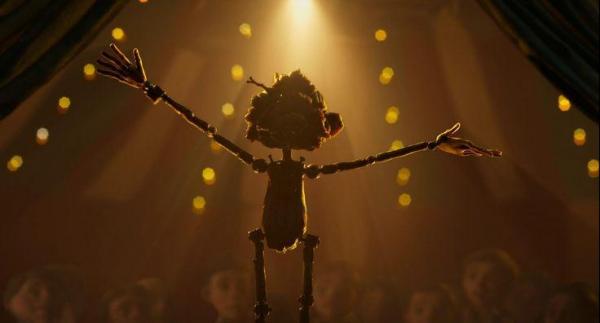
It’s funny that you attached that second image, I wonder if it was deliberate. We can read “credere, obbedire e combattere” (from Italian it would translate into “believe, obey and fight”) which was a slogan associated with italian fascism, particularly the idea that citizens should obey authority, believe in the regime’s ideology and fight for it. In Collodi’s original work Pinocchio repeatedly meets figures of authority who tell him what he should or should not do. And I believe it was a genius move from Guillermo to interpret this as a movement from disobedience toward conformity. Pinocchio didn’t want to be a “puppet” and didn’t want someone else to pull his strings (political double meaning intended).
Exquisite choice of a movie, can’t wait to read your next review!
It was intentional haha ! It's actually an interesting change of environment in the story, as this painting of the slogan appears after world war two, the wall was covered with a drawing of I believe mother Mary (?) In the beginning, in a way, mother Mary's also represents obedience, but it was an obedience based on humility, unlike fascism that was about obedience based on greed and higher figures wanting power ! And thank you, I will be making the next review tomorrow :)
i love stories who question what being human is, so this is really interesting personally how someone else can interpret that through this movie
awesome review
Ikr? I was surprised because the other two pinocchio movies that released in the same year were HORRIBLE, if you know that one gay pinocchio meme, yes that released in the same year as this masterpiece
I loved this movie and your review, I'm looking forward to the next one
Im happy you watched it omg :3
Italy mentioned
But at what cost
This series will follow a list that goes more niche as I continue to watch movies, the movies will become older and less known as more reviews are made daily ! Stay tuned for more ♡
please do Hikari be my light
I will have to watch it soon...