Hey there, it's been quite a bit since I've written a post like this, I'm sorry, I was having personal difficulties as well as many things to take care of outside of this platform so I was not capable of writing a detailed post about bears as I always do. On the bright side, I took this as an opportunity to read more about today's special dude :)
For today, we have a very special and popular bear, none other than the Giant Panda (≧∀≦) !

Pandas (known as Ailuropoda melanoleuca) belong to the family Ursidae, making them true bears despite many traits that suggest otherwise, like their distinctive coloration, bamboo-relient diet, and deceptively `gentle` appearance.
In fact, the oldest fossil belonging to bears is from a the family Ailurarctos, the ancestor of giant pandas, dated back to 11.6 million years ago and found in spain.
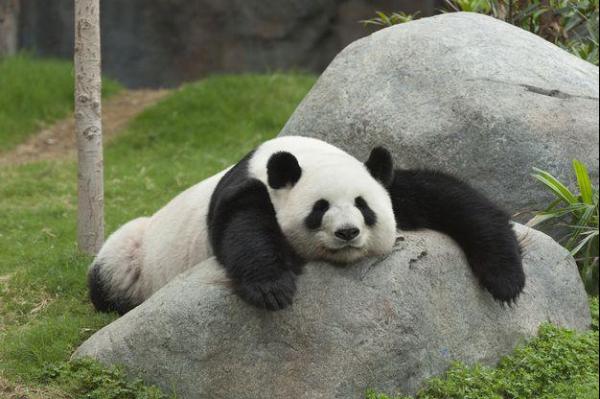
Panda bears are native to the mountainous forests of central China, particularly in Sichuan, Shaanxi, and Gansu. And although they *are* classified as carnivorans,
Pandas are overwhelmingly herbivorous, with bamboo accounting for roughly 99% of their diet ! they consume different parts of the plant depending on the season, including leaves, stems, and shoots. A single panda can eat over 12 kilograms of bamboo daily and occasionally much more when food quality is low.
Their digestive system however is still largely similar to that of other bears and is not particularly efficient at extracting nutrients from tough plant material, which is precisely why pandas spend about half of their day feeding and why they conserve energy, as it is essential to their survival.
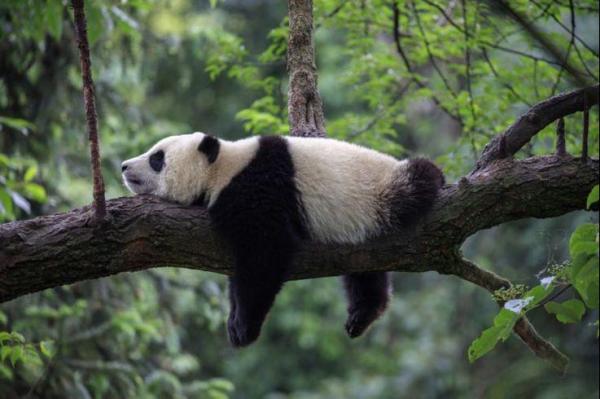
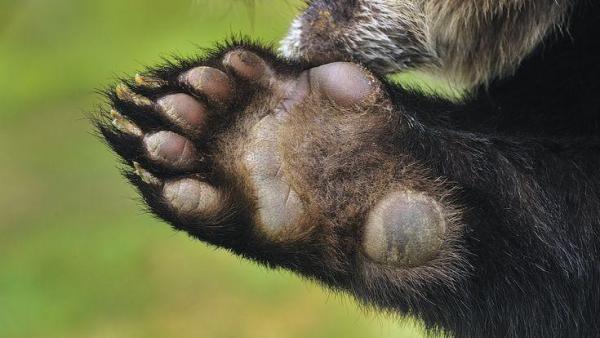
one most interesting thing I find about these bears is their `false thumb`, or more accurately described as the opposible psuedo thumb. It's an enlarged wrist bone called the radial sesamoid, essentially it funcions functions alongside their five actual digits to help them grasp bamboo, and often other tools, with advanced manipulation, thus allowing them to tear down bamboo to smaller pieces more easily.
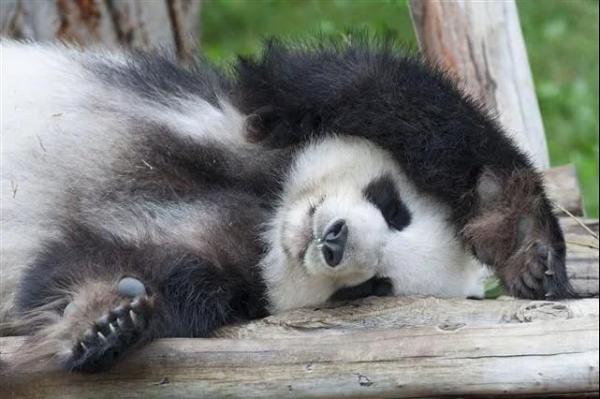
Unlike many bear species that hibernate, giant pandas do not undergo true winter torpor, partly because their bamboo diet cannot support the prolonged fasting that needs a great amount of fat to survive; so instead, they move to lower areas in the mountains during colder months.
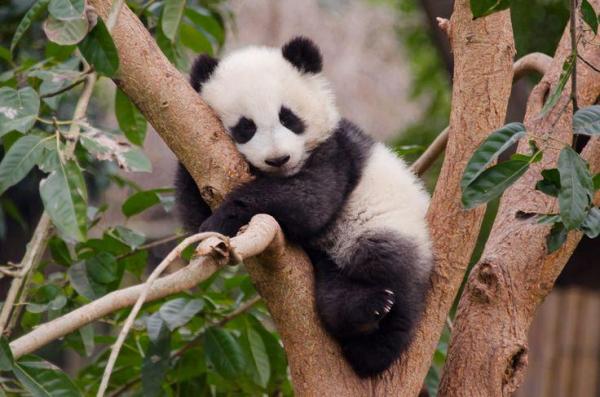
Reproduction is, as you may have read before on the Internet, famously challenging because females are fertile for only a very short period each year ! usually around one to three days, and pregnancies can involve delayed implantation. Which makes the possibilities of pregnancies highly low, this then explains the fact panda bears were nearing extinction at one point.
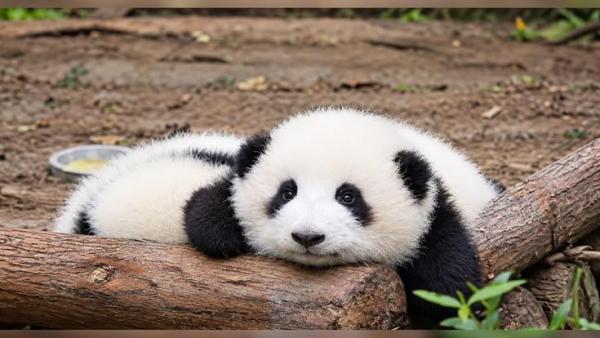
Panda cubs are also astonishingly underdeveloped at birth: a newborn typically is roughly 0.001% of its mother's weight, and is pink, nearly hairless, blind, and completely dependent on her care. But the cubs do fortunately develop rapidly during their first months, gradually gaining fur, opening their eyes, and learning to move around.
The earliest sign of Giant panda's appeared through the extinct species (Ailuropoda melanoleuca), the oldest known ancestor of the giant panda lineage, which lived about 11.6 million years ago in what we now consider to be Spain. This suggests a Western European origin for the giant panda lineage. However, the fossil record of this group of bears is still too scarce and fragmentary to say for certain where they arose, but I do think personally that it is a very interesting piece of evidence
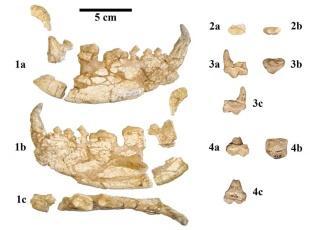
Because the second oldest fossil we know of, belongs to Ailurarctos, a more direct ancestor to Giant bears, and their jaw structure was found inside a cave in china, the fossil dates back to 8.9 million years, meaning that are is roughly 2.7 million years where giant pandas travelled to the mountains of East Asia and continued to develop the diet we know of today.
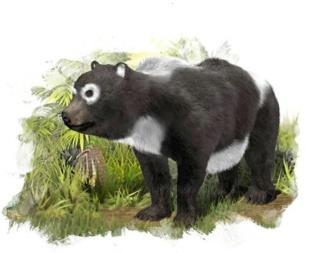
Although, the fossil evidence found in spain suggested that Ailuropoda melanoleuca did in fact eat bamboo when their dental history was further investigated, there was also clear evidence of meat and fruit intake, meaning that this ancestor was a generalist, much like the bear species we know today as brown bears and black bears.
The origins and purpose of their unique coat pattern is still up for debate, the most likely theory to our understanding is that pandas used their coats to camouflage in the snowy mountains, but that theory is rather weak when you look at the origins of pandas.
☆ The good news are, the International Union for Conservation of Nature downgraded the giant panda from Endangered to Vulnerable in 2016 !! :)
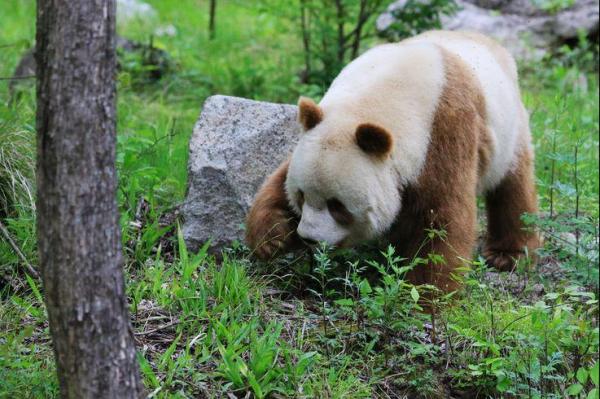
☆ Tomorrow's bear is actually not very far off from today's, they are the sub species of Giant Pandas: Qinling Pandas! The other sub species of Pandas will also be talked about soon, known as the red Pandas( ̄へ ̄)



Messages
Finally another bears series ! I love reading these ✧◝(> ▿ <)◜✧
you better make the post tmrw, i’m excited to read it